
Start with the pressing, not the title
The same album can exist in dozens of versions, and the gap between them is the single biggest factor in price. An original first pressing and a reissue printed forty years later are, to a buyer, two different products that happen to share a cover. Before you look up any price, work out exactly which one is in your hands.
Almost everything you need is printed on the record itself, not on the sleeve. Slide the disc out and read it in good light.
- The runout groove — the blank ring between the last track and the label. Stamped or etched matrix and catalogue numbers there identify the exact stamper used, which is how first pressings are confirmed.
- The label design. Labels were redesigned often, and collectors date pressings by logo placement, rim text and colour.
- The catalogue number on the spine and label, and whether it differs between the two.
- Mono or stereo. For records from the era when both were sold, one of the two is usually far scarcer.
- Country of manufacture. A domestic first pressing and a foreign licensed pressing rarely fetch the same price.
Grade the record and the sleeve separately
Condition is the second multiplier, and it is where most owners overestimate. Record collecting has a shared vocabulary — the Goldmine standard — and buyers price against it strictly. A copy described one grade too generously is the most common reason a sale falls through.
- Mint (M) — genuinely unplayed and sealed. Rare enough that you should be suspicious of the word.
- Near Mint (NM) — looks and plays as new, no visible marks under a light. This is the realistic ceiling for a used record and the grade most price guides quote.
- Very Good Plus (VG+) — light surface marks that do not carry into the sound. Typically well under half of NM value.
- Very Good (VG) — audible surface noise between and under tracks. Priced as a listening copy, not a collectible.
- Good / Fair (G/F) — plays through, but scratches and wear are obvious. Worth keeping only for genuinely scarce titles.
Grade the sleeve on its own line. Seam splits, ring wear, water staining and a cut corner all move the price independently of the vinyl, and a strong record in a tired sleeve is a common, awkward mismatch. Note any inserts too: original inner sleeves, posters and lyric sheets are frequently missing, and a complete copy is worth measurably more than an incomplete one.
Price against completed sales, never asking prices
An open listing tells you what one optimistic seller hopes to get. A completed sale tells you what somebody actually paid. Those two numbers can differ by an order of magnitude on the same record, and only the second one is the market. Look at several recent sales of the same pressing in the same grade, discard the outliers, and take the middle.
Bear in mind that scarcity and demand are different things. Plenty of records are genuinely hard to find and still cheap, because few people want them. Price follows demand.
Doing this for a whole shelf
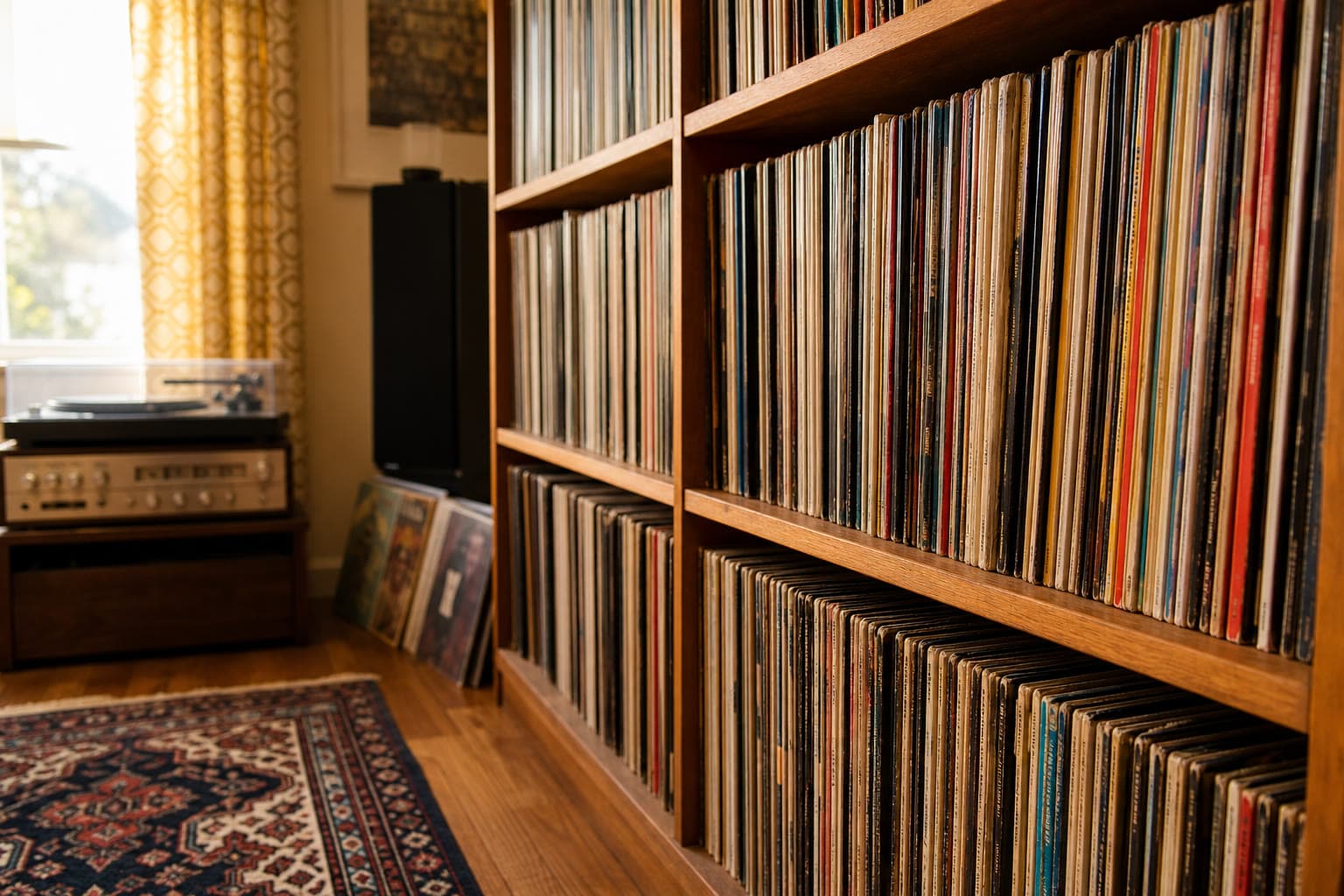
The process above takes a few minutes per record, which is fine for one and impossible for four hundred. That gap is what samla.ai is built for: photograph the record and a two-stage analysis identifies it, picks the category, and reads the category-specific details that actually decide value — pressing, edition, condition cues — then returns a market estimate with comparable listings to check it against.
Every field stays editable, so when you can see something the camera cannot — a matrix number you have already looked up, a grade you would rather state conservatively — you correct it and the record keeps your version. Each item is filed where it physically lives, down to the shelf, so the catalogue stays useful long after the valuing is done.
FAQ
What is my vinyl worth?
Most records sell for a few euros. A few sell for a month of rent. The difference is almost never the artist: it is which pressing you own, what condition the disc and sleeve are in, and what recent buyers paid for the same copy.
How do I find out what a record is worth?
Identify the exact pressing from the runout, label and catalogue number. Grade the vinyl and the sleeve separately on the Goldmine scale. Then look at several completed sales of that pressing in that grade, discard the outliers, and take the middle.
What makes a vinyl record valuable?
Demand for that pressing, in that condition, this week. Scarcity alone is not enough: plenty of records are hard to find and still cheap, because few people want them. Price follows demand.
Should I use asking prices or sold prices?
An open listing tells you what one seller hopes to get. A completed sale tells you what somebody actually paid. Those two numbers can differ by an order of magnitude on the same record. Price against sold copies.
How do I value a whole vinyl collection?
The same three checks, per record. That takes a few minutes each, which is fine for one album and impossible for a few hundred. Photograph the record in samla.ai and a two-stage analysis identifies it, reads the details that decide value, and returns a market estimate with comparables to check.