
Why grade at all?
Buyers price against a shared language. Overgrade by one step and the sale falls through, or you earn a reputation you did not want. Undergrade and you may ask less than the market - but undergrading is the safer habit when you are unsure. Goldmine grades for media and sleeve separately; treat them as two lines, not one vague "pretty good."
What is the Goldmine scale for the disc?
Grade the vinyl under a bright light, angled so surface marks show. Play-grade when you can: some scratches look worse than they sound, and some hairlines sing. Be honest about both what you see and what you hear.
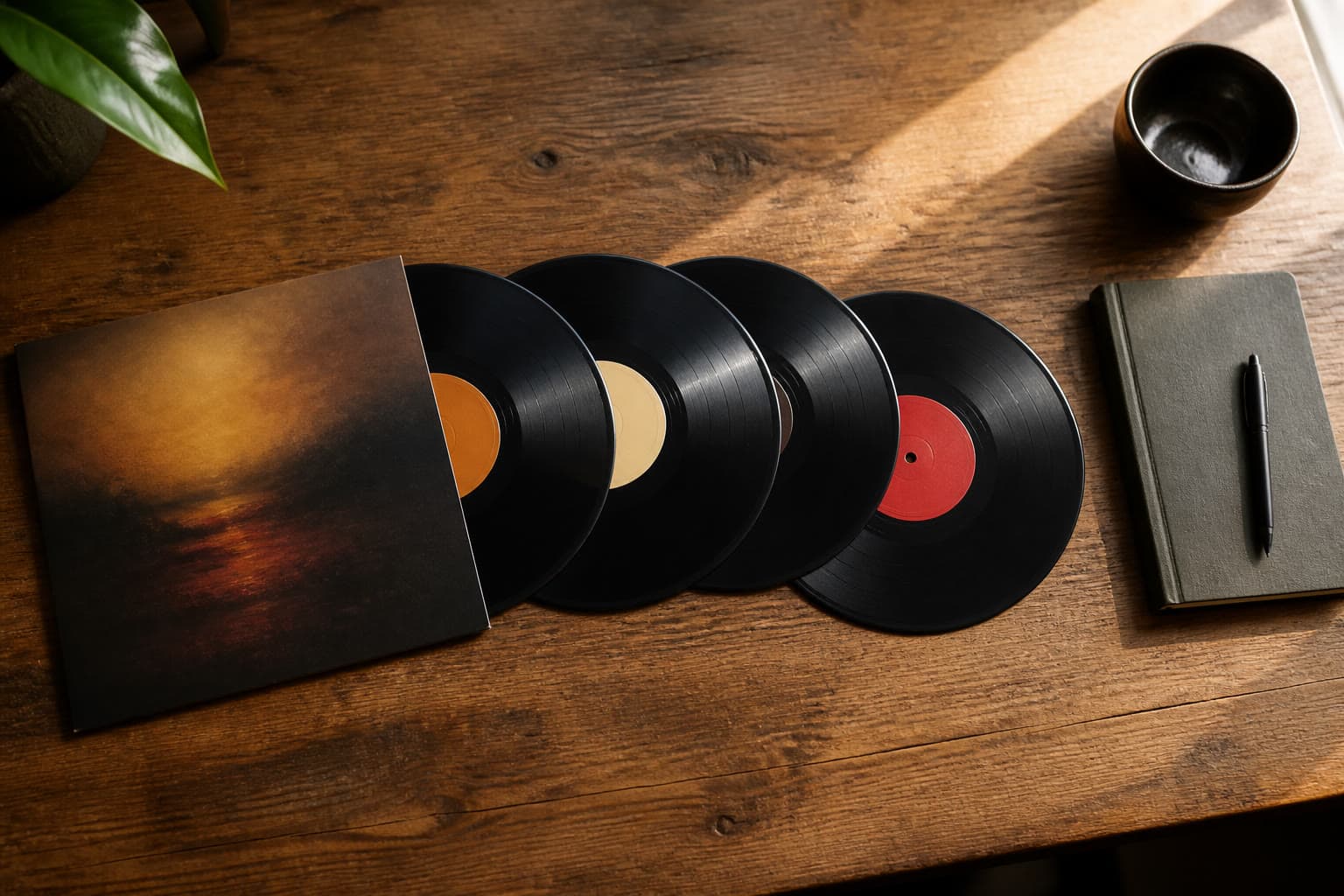
- Mint (M) - sealed or genuinely unplayed. Use sparingly; most used copies are not Mint.
- Near Mint (NM) - looks and plays as new, no visible marks under light. The realistic ceiling for opened copies and the grade most comps quote.
- Very Good Plus (VG+) - light surface marks that do not carry into the sound. Often well under half of NM on the same pressing.
- Very Good (VG) - audible surface noise between and under tracks. A listening copy, not a display piece.
- Good / Fair (G/F) - plays through, but scratches and wear are obvious. Keep mainly for scarce titles.
How do you grade the sleeve?
The jacket gets its own grade. Seam splits, ring wear, corner bumps, water staining, writing, stickers and cut-outs all move price independently of the disc. A strong NM record in a VG sleeve is a common, awkward mismatch - describe both clearly instead of averaging them into one cheerful word.
- Seam splits - how long, which edge, and whether tape was used.
- Ring wear - circular impression from the disc pressing against the jacket.
- Corners and spine - crushed, frayed or still sharp.
- Stains, fading, writing, price stickers, cut corners or drill holes.
- Original vs replaced inner sleeve - note it either way.
What about inserts and completeness?
Posters, lyric sheets, obi strips and printed inners are frequently missing. A complete copy of the same pressing and grade is worth measurably more than an incomplete one. Photograph every insert with the record so the catalog - and any later listing - shows what is actually in the package.
How strict should you be when selling?
Strict. Write the media grade and sleeve grade as separate facts. Mention defects in plain language before the buyer asks. Price against completed sales of the same pressing in the same grades - not against the nicest open ask you can find. If the record has never been play-graded, say that too.
How does grading connect to market estimate?
The same pressing in NM and VG+ can sit far apart in what people actually paid. Identify the pressing first, then grade, then look at completed sales in that grade band. A market estimate with comparable listings is useful only when the comps share pressing and condition - mixing a first pressing NM sale with a reissue VG ask is how shelves get mispriced.
Can a photo help you grade faster?
A clear sleeve and label photo will not replace your eyes on the groove wall, but it anchors the item while you decide. In samla.ai, scan the record, then edit the condition fields yourself - the camera surfaces cues, you own the grade. Keep the market estimate beside comparable listings so your asking price tracks completed sales of similar copies.
FAQ
Why grade at all?
Buyers price against a shared language. Overgrade and the sale falls through. Undergrade when you are unsure. Goldmine grades for media and sleeve separately - two lines, not one vague "pretty good."
What is the Goldmine scale for the disc?
Grade under bright light so surface marks show, and play-grade when you can. Mint is rare. Near Mint is the realistic ceiling for opened copies. VG+ has light marks that do not carry into the sound. VG and below are listening copies.
How do you grade the sleeve?
The jacket gets its own grade. Seam splits, ring wear, corner bumps, stains, writing and cut-outs move price independently of the disc. Describe both clearly instead of averaging them into one cheerful word.
How strict should you be when selling?
Strict. Write media and sleeve grades as separate facts, mention defects before the buyer asks, and price against completed sales of the same pressing in the same grades. If you have never play-graded the copy, say that too.
Can a photo help you grade faster?
A clear sleeve and label photo will not replace your eyes on the groove wall, but it anchors the item while you decide. In samla.ai you scan the record, then edit the condition fields yourself - the camera surfaces cues, you own the grade.