
What does a useful sneaker catalog need?
Brand and a nickname are the easy part. The fields that decide later value and selling are silhouette, colorway, style code, size, condition, inclusions, and where the pair physically sits. Skip those and you rebuild the hard work the night you try to list something.
- Identity - brand, silhouette, colorway, style code.
- Size - US and EU, as printed.
- Edition - retail, collab, sample when that splits the market.
- Condition - deadstock or worn, creasing, outsole, odour.
- Inclusions - OG box, extra laces.
- Place - closet, shelf, box.
How do you catalog without typing all weekend?
Photograph the pair straight on, or the box label if that is clearer. samla.ai identifies the silhouette and colorway, reads the style code, and shows a market estimate with comparable listings. You review, edit anything soft, add your condition notes, and file the item to a place. That is the whole loop; repeat shelf by shelf.
How should you shape places?
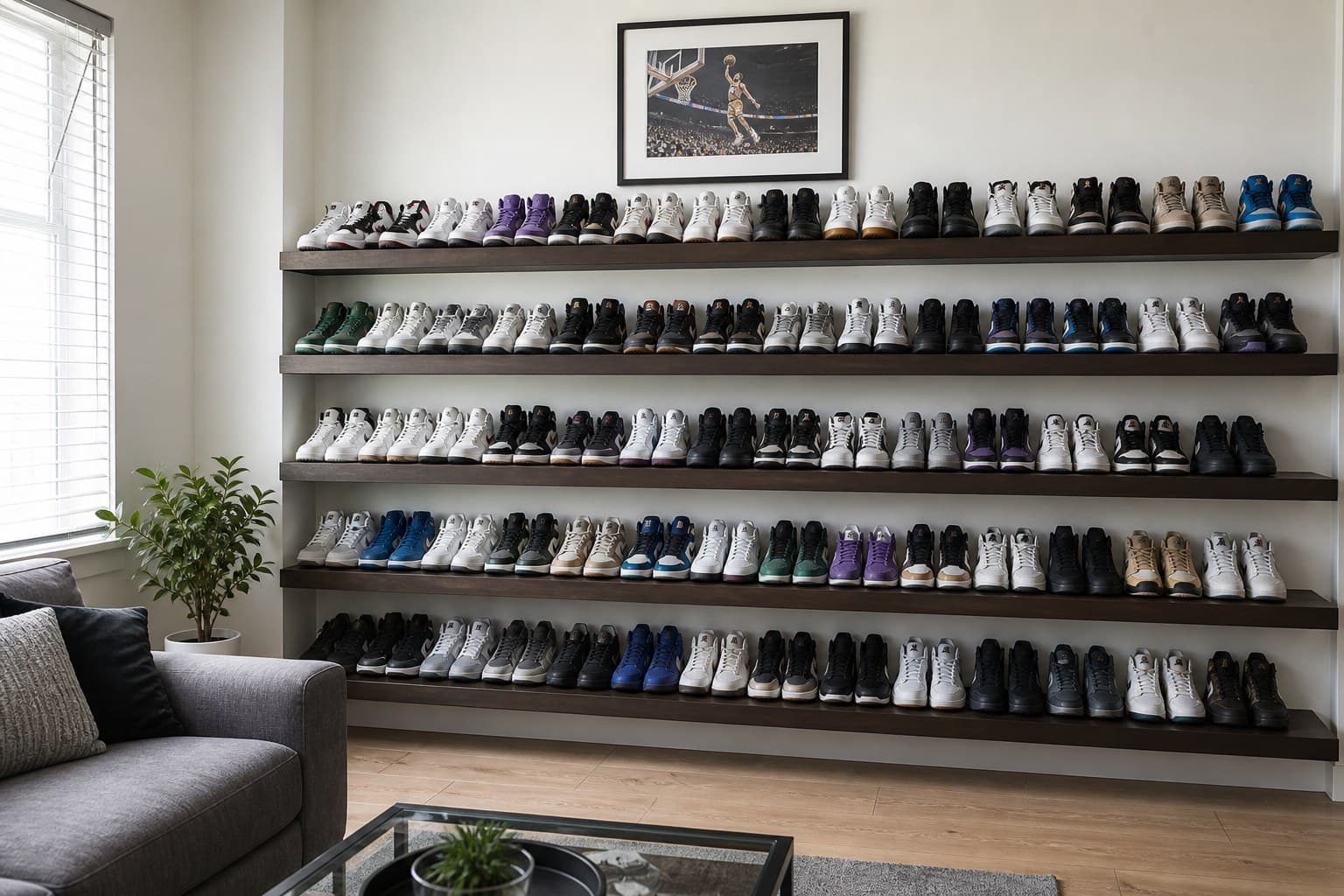
Give the catalog the same shape as the closet. One place per shelf or box stack beats a flat pile of "Sneakers". When you stand in a shop wondering whether you already own that code in that size, search from the phone and read the place line instead of guessing.
What order works for a whole rotation?
- Pick one shelf. Finish it before you open the next.
- Scan the pair or the box label, confirm the style code, edit if needed.
- Add size and condition - conservative when unsure.
- Note the box and extra laces if they matter for a later listing.
- File to the place that matches the physical shelf.
- Move on. Do not pause to rewrite every biography field.
How do Free, Pro and Ultra fit?
The free plan includes collection places, a monthly scan allowance and Look up mode - enough to work through a closet at a steady pace. Pro and Ultra raise scan and item limits and unlock publishing to marketplaces when a cataloged pair is ready to leave. Plans are Free, Pro and Ultra; pick based on rotation size and whether you will publish listings.