
Why deleting was the wrong model
For a long time there was exactly one way for an item to leave a collection in this app: delete it. That removed the item and its photos, permanently, and it was wrong in three separate ways.
- You drank the bottle. The bottle is gone; what you knew about it is not, and you may well want to buy it again.
- You sold the record, quite possibly off the back of an ad this app wrote for you, and the sale price is the single most interesting number in your collection. Deleting threw away both the item and the sale.
- The growth chart counts what survives, so deleting an item quietly rewrote the past and claimed you never owned it.
What the rest of the category does
We looked at how the serious collection and inventory tools handle this, across wine, records, board games and general inventory systems, and the answer was unusually consistent: nobody deletes. The row persists and its state flips. CellarTracker tracks bottles as in stock, consumed or pending. InVintory moves bottles to a browsable Past Bottles archive you can restore from.
The failure mode when a tool gets this wrong is a trust event rather than an inconvenience. Vivino users have written reviews about removing wines from My Wines and discovering that their ratings went with them.
That is the shape of the mistake we wanted to avoid: an action that looks like tidying up and turns out to be destruction.
How to mark a departure
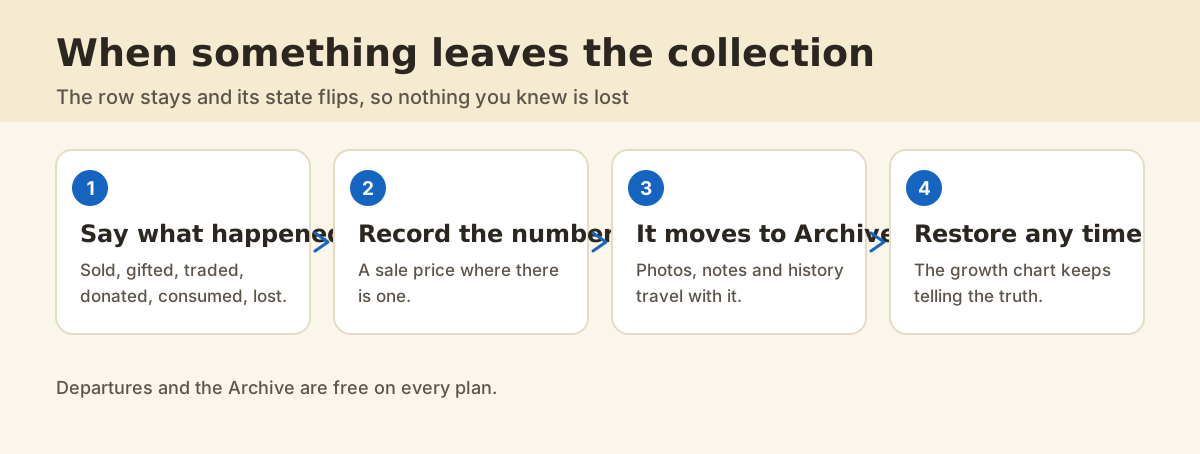
1. Pick the verb that fits
The options are Sold, Gifted, Traded, Donated, Consumed, Damaged or spoiled, Lost and Returned. Wine gets its own wording, so a bottle is drunk or finished rather than consumed, because that is what people call it.
2. Record the number, if there is one
A sale gets a price. That is the figure that turns a collection log into something you can actually reason about later: what you paid, what it was estimated at, what somebody really gave you for it.
3. It moves to the Archive
Photos, notes, collectible fields and history travel with it. The Archive is on the Workbench tab, and it is browsable rather than a black hole.
4. Bring it back whenever you like
Restore puts the item back in your active collection. Buying the same bottle again is a restore, not a re-scan.
Does a departed item still count against my limits?
Archived items are out of your active collection, which is what the item limits count. The point of the Archive is to keep the knowledge without keeping the thing.
What about actually deleting something?
Delete still exists, for the cases where you genuinely want the record gone: a duplicate scan, a test item, something you never owned. It removes the item and its photos permanently, and a shared page for that item goes with it. For everything that really left your house, a departure is the better answer.
FAQ
Can I search the Archive?
Yes. It is browsable, so a thing you owned three years ago is still findable by name.
What happens to a listing when I mark the item sold?
The marketplace listing has its own status, and Selling Center is where you see it. Mark the item sold in samla.ai and end any listings still live elsewhere.
Does a shared web page disappear when I sell the item?
No. A departure does not unpublish a shared page, because a link somebody already has should not break by surprise. Revoke the share yourself if you want the page gone.
Is the departure reflected in my collection value?
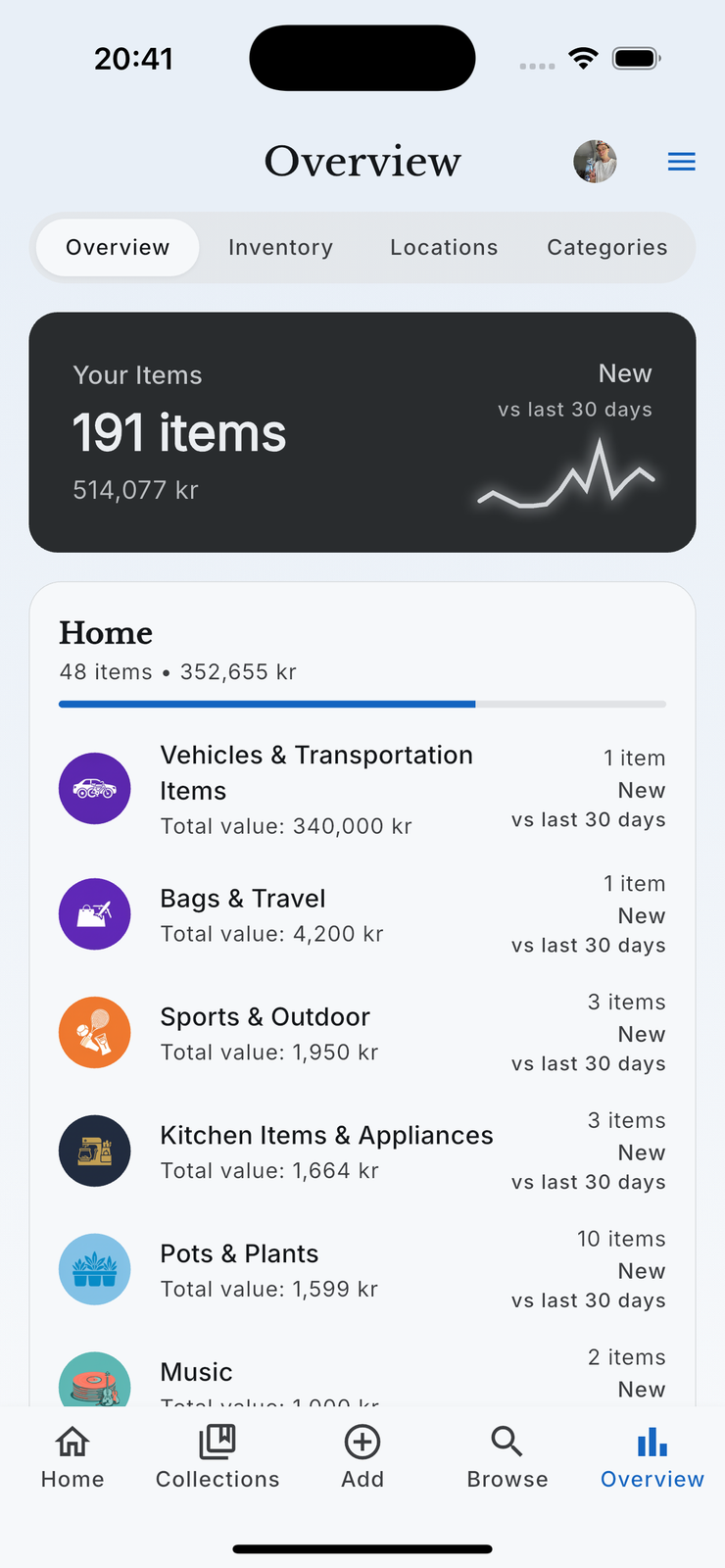
Yes. The active collection stops counting the item, and the history keeps the fact that you owned it, which is what makes the chart honest.