Where we were before this
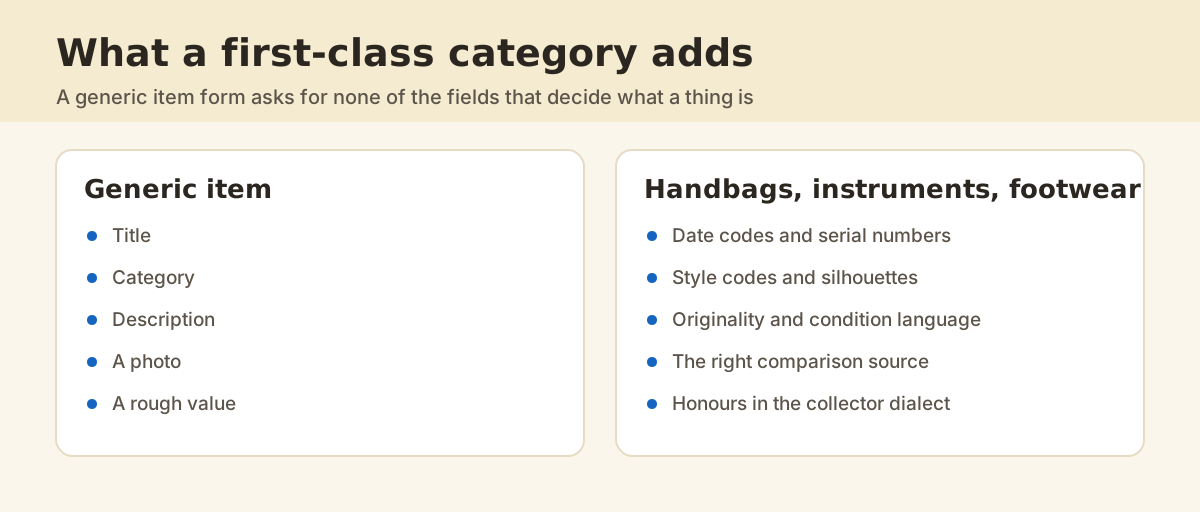
A generic item form is a reasonable place to start and a bad place to stay. It asks for a title, a category, a description and a photo, which is enough to remember that you own something and nowhere near enough to say what it is.
Collectors know this instinctively. Two handbags that look identical in a photo are a different bag depending on the date code inside. Two guitars of the same model are a different instrument depending on what the serial number says about the year and the factory. Two pairs of the same trainer are a different pair depending on the style code.
Why does each category need its own fields?
Because the field is the identification. Handbags and leather goods brought a nineteen-field detail set with date-code decoding for the major houses. Musical instruments and gear brought seventeen fields and serial-number decoding across the eras of the big manufacturers. Footwear brought silhouette, edition, inclusions and style-code discipline.
A generic form would have asked for none of that, and the app would have identified a bag as "a brown leather handbag", which is true and useless.
Why does each category compare prices somewhere different?
Because no single price source is good at everything. Instruments and gear look to the Reverb price guide and eBay sold listings. Footwear prefers the last sale on StockX. Handbags lean on Fashionphile and eBay sold comparisons.
Using one generic source for all of them would produce numbers that look confident and mean very little. Values in samla.ai are estimates for informational purposes rather than professional appraisals, and the least we can do is estimate them from the right market.
Why does each category get its own vocabulary?
Because collectors do not all use the same words for the best thing on the shelf. A footwear collection has a grail pair. A gear collection has the most sought-after piece. Calling both of them "highest value item" is technically correct and sounds like a spreadsheet.
So each category has its own honours dialect, in all nine app languages, along with its own accent colour and cover art.
What the app now refuses to publish
This work drew a line worth stating plainly. Public share pages show descriptive fields, and the identifying numbers stay private: a handbag date code, an instrument serial number, authentication status. Those are the fields that help a counterfeiter or a thief, and no page you share needs them.
Style codes for footwear are descriptive rather than identifying, so those do appear. The rule is the distinction, not the category.
What landed, and why
| Category | What it brought | Why |
|---|---|---|
| Handbags and leather goods | 19 detail fields, date-code decoding | The date code is what tells two identical-looking bags apart |
| Musical instruments and gear | 17 detail fields, serial-number decoding | Year and factory decide what an instrument is worth |
| Footwear | Silhouette, edition, inclusions, style codes | A style code is the closest thing sneakers have to a catalogue number |
FAQ
Do I have to do anything to get the new categories?
Update the app. Newly scanned items land in the right category automatically, and you can re-identify an older item to pick up the new fields.
What are the other categories?
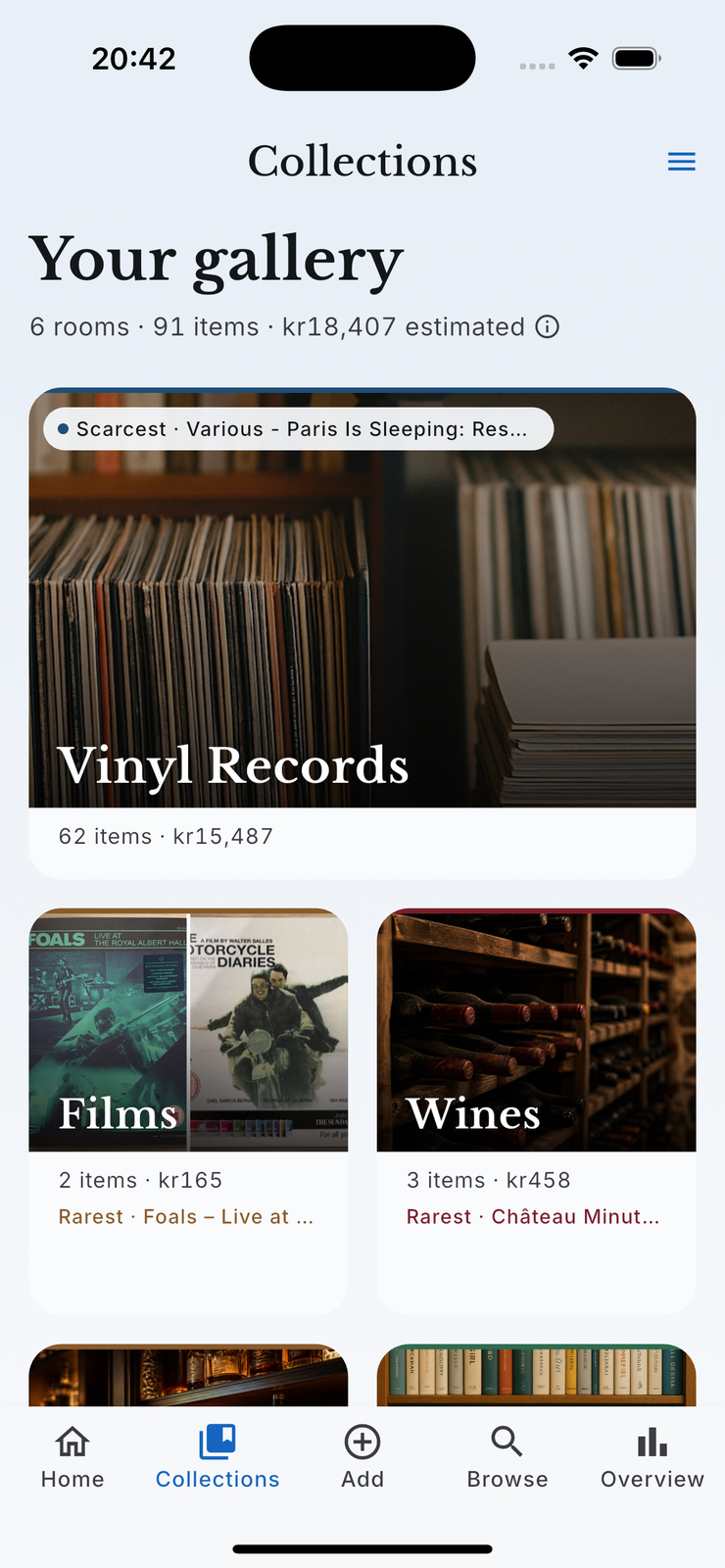
The thirteen cover the areas people collect most, from music and books through wine, films, trading cards and stamps. The collections pages on the site list them.
Does this change what a value estimate means?
No. Estimates stay estimates for informational purposes rather than professional appraisals. What changed is which market they are drawn from.
Can I sell these on a marketplace?
eBay works for all of them and Tradera is mapped per category. A Reverb connector for instruments is a separate piece of work in progress.