

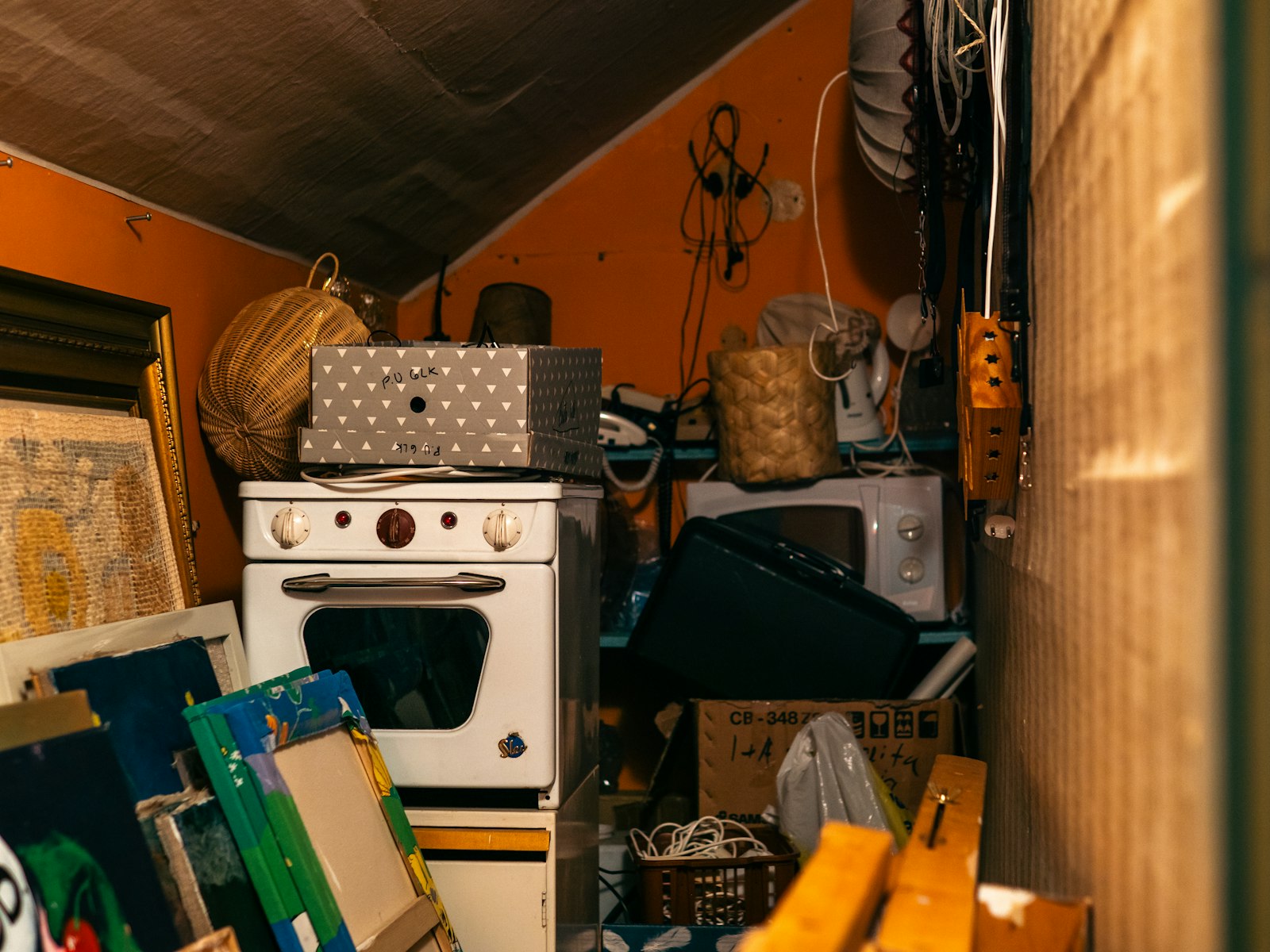
How much value is hiding in ordinary homes?
More than you would guess, and there are numbers on it. OfferUp's 2025 Recommerce Report projects the US recommerce market will grow 34 percent by 2030, reaching 306.5 billion dollars. And back in its 2022 Reuse Report, Mercari estimated that American households were sitting on 13 billion dollars of unused kids' and baby items alone. Attics, basements and wardrobes are full of things someone else is actively looking for - the owners just stopped seeing them.
How do you find out what attic things are worth?
Point your phone at them, right where they are. Open Look up mode - the point-and-ask camera in samla.ai's free plan - and aim it at a thing: you get what it is and what items like it tend to go for, without carrying anything downstairs. That weird old camera, the box of mixed china, the paperback with the odd dust jacket: answers on the spot, right there in the dust.
When something deserves keeping, scan it into your collection properly and it gets a photo, details and an estimated value. The values are estimates for informational purposes, never professional appraisals - for a piece that might be genuinely rare, a specialist dealer or auction house is the right next step.
Which attic finds are worth money most often?
- Cameras, lenses and hi-fi - Film gear and vintage audio have a devoted second life
- Records - Especially pressings your parents bought before you were born
- Toys in their boxes, building sets and console games - Complete and boxed sells far better than loose
- Binders of trading cards from the late 90s onwards - One right card can be worth more than the rest of the binder
- China, glass and the Christmas-only cupboard - Full sets and known makers find eager buyers
- Hand tools - Good tools barely lose value
Be prepared for most of it to be ordinary. That is fine - the point is a valued list you can act on. The surprises hide in the ordinary boxes, and you only find them by looking at everything once.
What do you do once everything has a value?
Decide calmly, item by item. With everything visible and priced, keep-or-pass-on stops being one overwhelming decision and becomes many small easy ones. Selling is a couple of taps from the item itself - Discogs for the records, Tradera or eBay for the rest (publishing is a Pro and Ultra feature, and which marketplaces you see depends on your country). And whatever stays in the attic now has a record: you know what is in every box, where it is, and what the shelf above the water heater is actually worth.
FAQ
Do I need to bring things downstairs to value them?
No. Look up mode works wherever the item is - point the camera at it in the attic, the basement or the storage unit and you get an answer on the spot. It is part of the free plan and does not use your scan quota, so checking a whole shelf of maybes costs nothing.
Are the values exact prices?
They are estimates for informational purposes, based on what items like yours tend to go for - never professional appraisals. Condition, completeness and finding the right buyer move real prices a lot. When an estimate looks surprisingly high, treat it as a signal to have a specialist take a proper look.
What if I do not want to sell anything?
Then the catalog is still the win. A valued list of what you own is exactly what an insurance claim or an inheritance conversation needs, and it is how you finally know what is in every box without climbing up to check.