
Where we were before this
Public item pages shipped as a paid feature. That looked reasonable on paper: it is a hosted page, it costs something to serve, and paid tiers get the collector tools.
Then we watched what people actually did with a catalog. They show each other things. "Is this the pressing I think it is." "Look what was in the attic." "Would you give me forty for this." Sharing one item is not an advanced collector workflow; it is the most ordinary thing a person does with a thing they own.
Why move a feature down a tier?
Because the gate was in the wrong place. A plan boundary should sit where the value scales with use: more scans, more items, selling tools, export. Sharing one item does not scale like that. It is a single link, sent once, usually to one person.
What the gate was actually doing was making the free plan worse at the thing that makes people keep cataloging. Somebody who shares a find and gets an answer scans another shelf. Somebody who hits an upgrade prompt closes the app.
What does a shared page show?
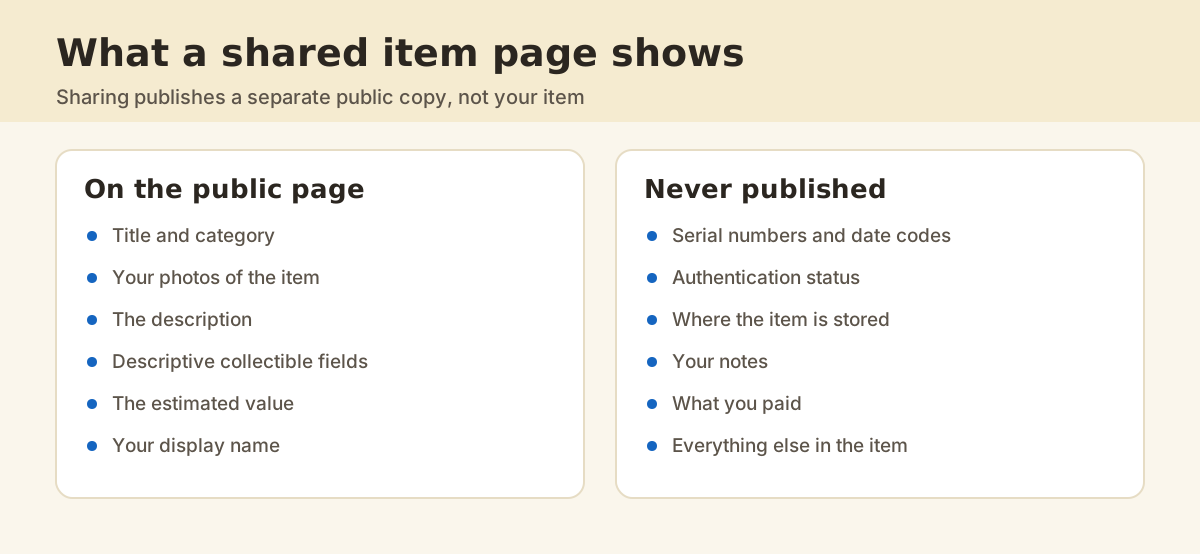
A deliberately short list, and the mechanism behind it is worth knowing because it is what makes the promise keepable. Sharing does not make your item publicly readable. It copies a named list of fields into a separate public document.
Anything not on that list is private by default, including fields that get added to the app years from now by somebody who has never thought about this feature. That is the whole safety property: new fields are private unless somebody deliberately adds them to the list.
The estimated value is on the page, because "what is this worth" is half of why people share an item. It carries the same disclaimer it carries everywhere: an estimate for informational purposes, never a professional appraisal.
What happens to links you already sent?
They keep working. A plan change never silently breaks a link somebody already has, and that principle survived the move even though moving to free made it moot. Selling an item does not unpublish its page either. Deleting the item does, and revoking the share is immediate and always available.
FAQ
Do I need to update the app?
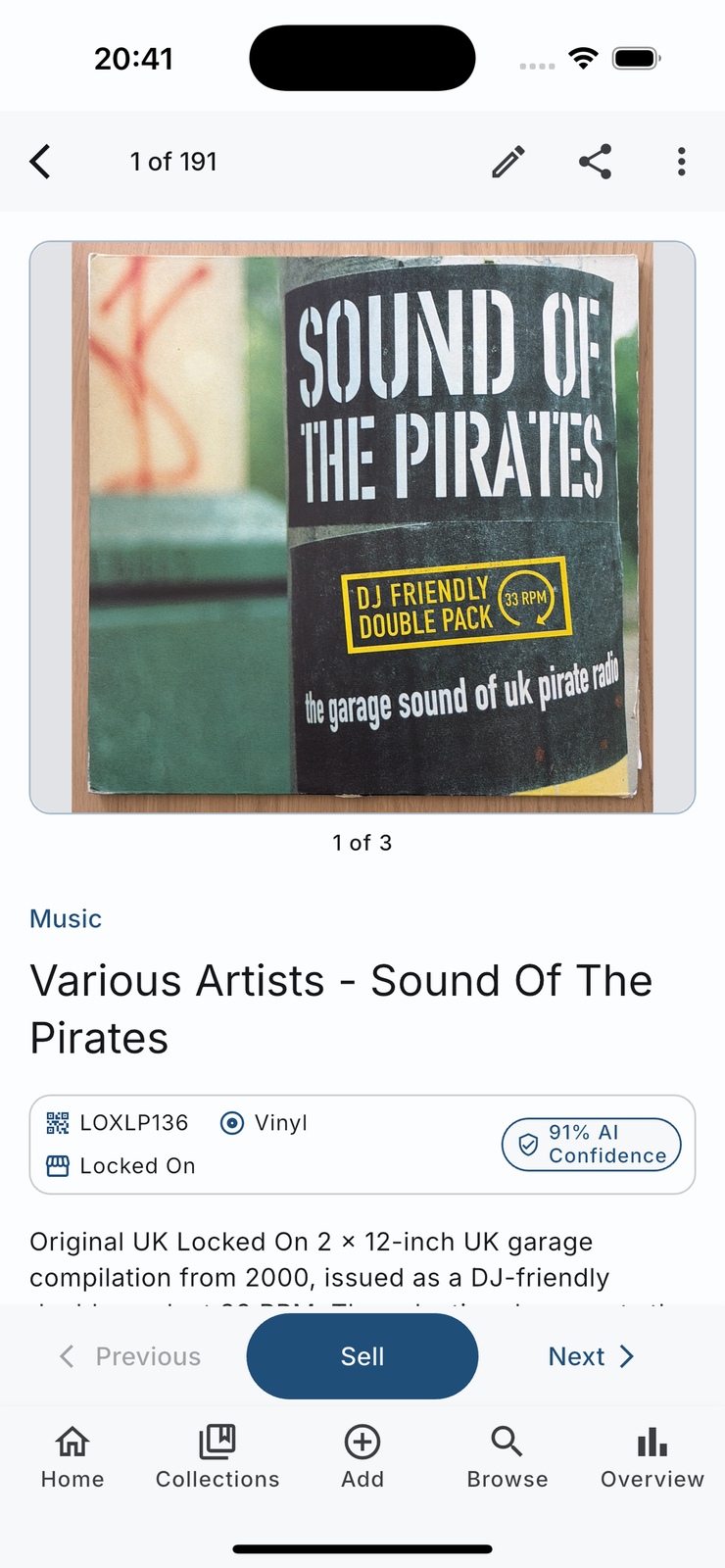
Yes, sharing is in the app. Update from the App Store and Share a link is on the item app bar.
Can search engines find my shared pages?
No. Shared item pages carry a noindex directive, so they stay out of search results. A shared page is a link you hand to somebody.
Can I share a Look up result before I keep it?
Yes. The staging detail screen shares through the same pipeline, which is useful when you are standing in a shop deciding whether to buy something.
Who can share an item in a family space?
The person who added it. Several people can edit a shared item, and publishing it to the web is a more consequential act that names one person, so it stays with the owner.